Aligning the Team from the Design Seat with a North Star Strategy
Federato
EXECUTION
Strategic Planning • Organizational Design • Cross-Functional Leadership
IMPACT:
Company-wide alignment • Decision-making velocity • Series C positioning
ROLE:
Head of Design

Design leadership isn't just about what we build, it's about why we build it and who we're building it for.
Project gallery
The Problem:
The feedback from individual contributors was consistent: "How does my work contribute to the overall mission?" We were treading water in a crowded legacy space at the exact moment we needed to be category-defining to secure our next round of funding.
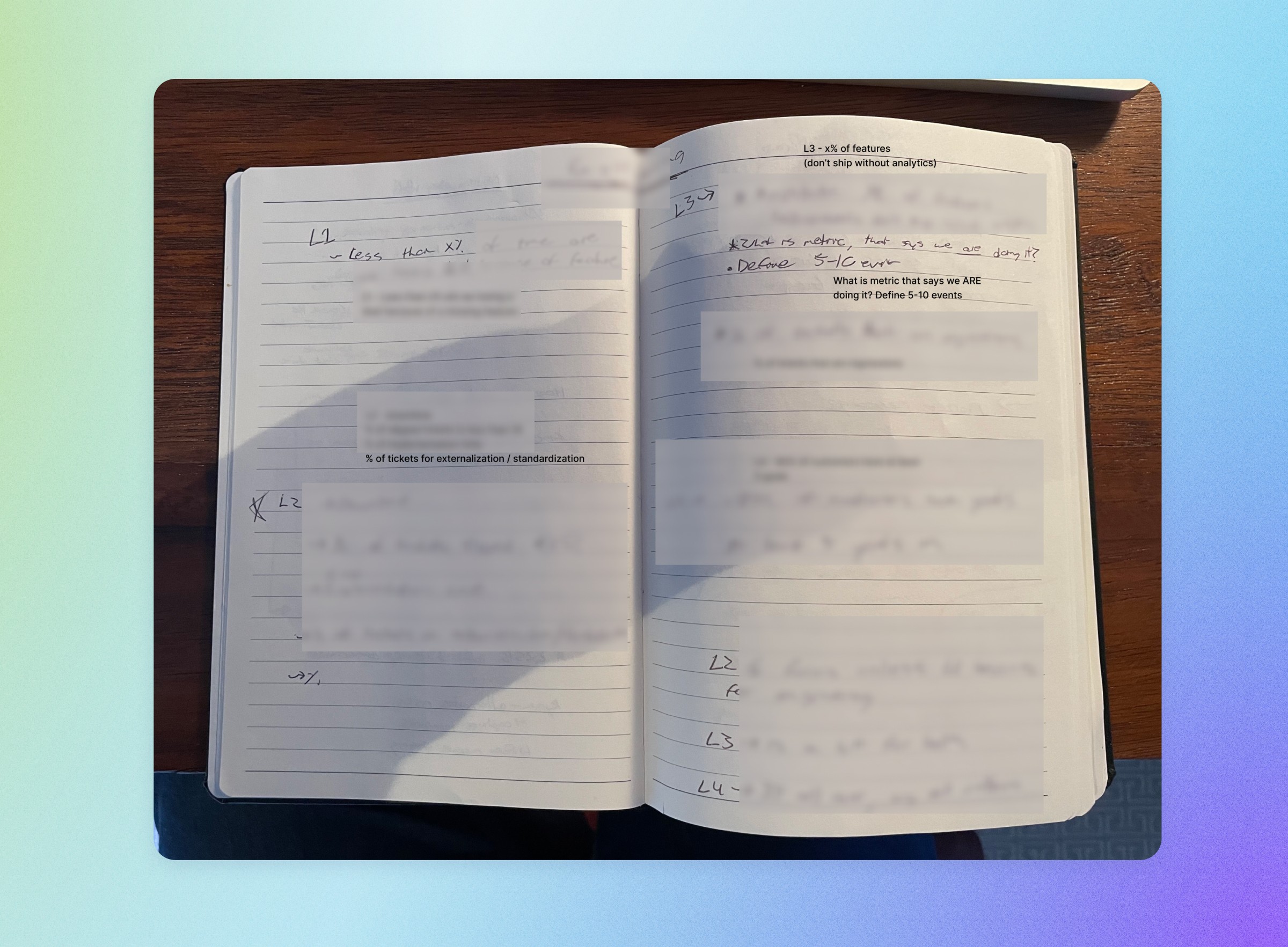
Federato technically had a North Star—developed early in the company's life—but it had never been dialed in. It was vague, more of a checklist item than a strategic tool. And as the product and company evolved, that initial vision no longer reflected where we were headed.
My Approach:
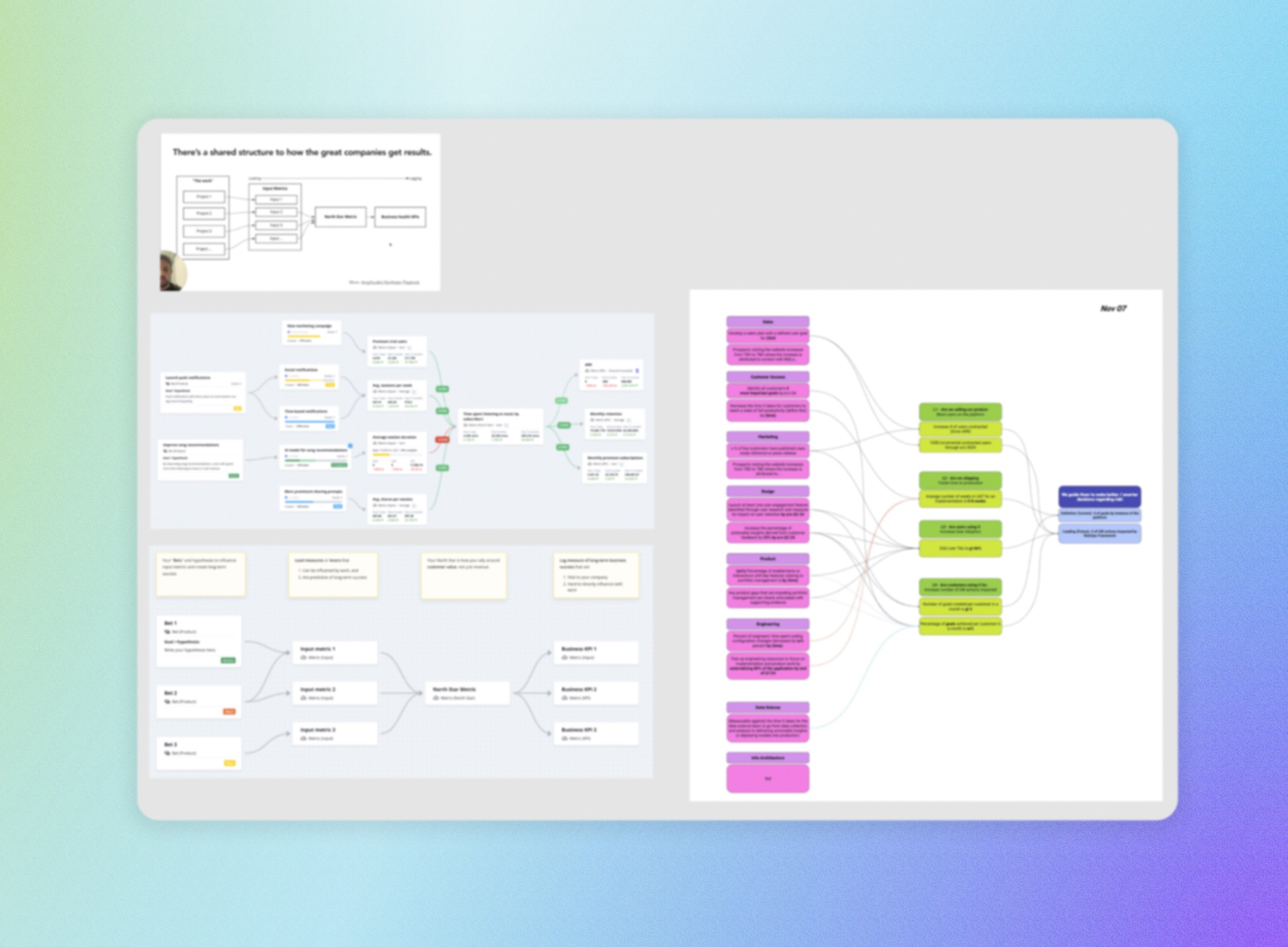
I came across an article on Amplitude's website profiling the North Star framework, and it clicked immediately: This is what we need to get aligned.
I brought a proposal to our CEO during our next 1:1, and he was immediately on board. Together, we ran a structured process over four months:
Initial pitch and vision alignment (CEO + me, ~2 hours): I facilitated the conversation to understand his business vision, the metrics and KPIs we needed to track, and the strategic narrative he wanted to tell investors and the team.
Refinement sessions with VP of Engineering and VP of Product (two sessions): I introduced the framework, synthesized their input, and aligned on how each function would contribute to the lead measures.
Leadership team presentation: I facilitated the session where we presented the framework to the full leadership team, incorporating their feedback to ensure buy-in.
Company-wide rollout: The CEO presented the final North Star to the entire company, with me supporting the visual and narrative structure.
Throughout, my role was to make the complex simple. Leadership often thinks in abstractions or jargon-heavy terms. For example, one lead measure started as a multi-layered statement about user acquisition and growth targets. I simplified it to a single, clear question that anyone in the company could answer: 'Are we selling our product?
The goal wasn't just clarity, it was clear dissemination. Every team member needed to see how their work connected to these lead measures.
The Output:
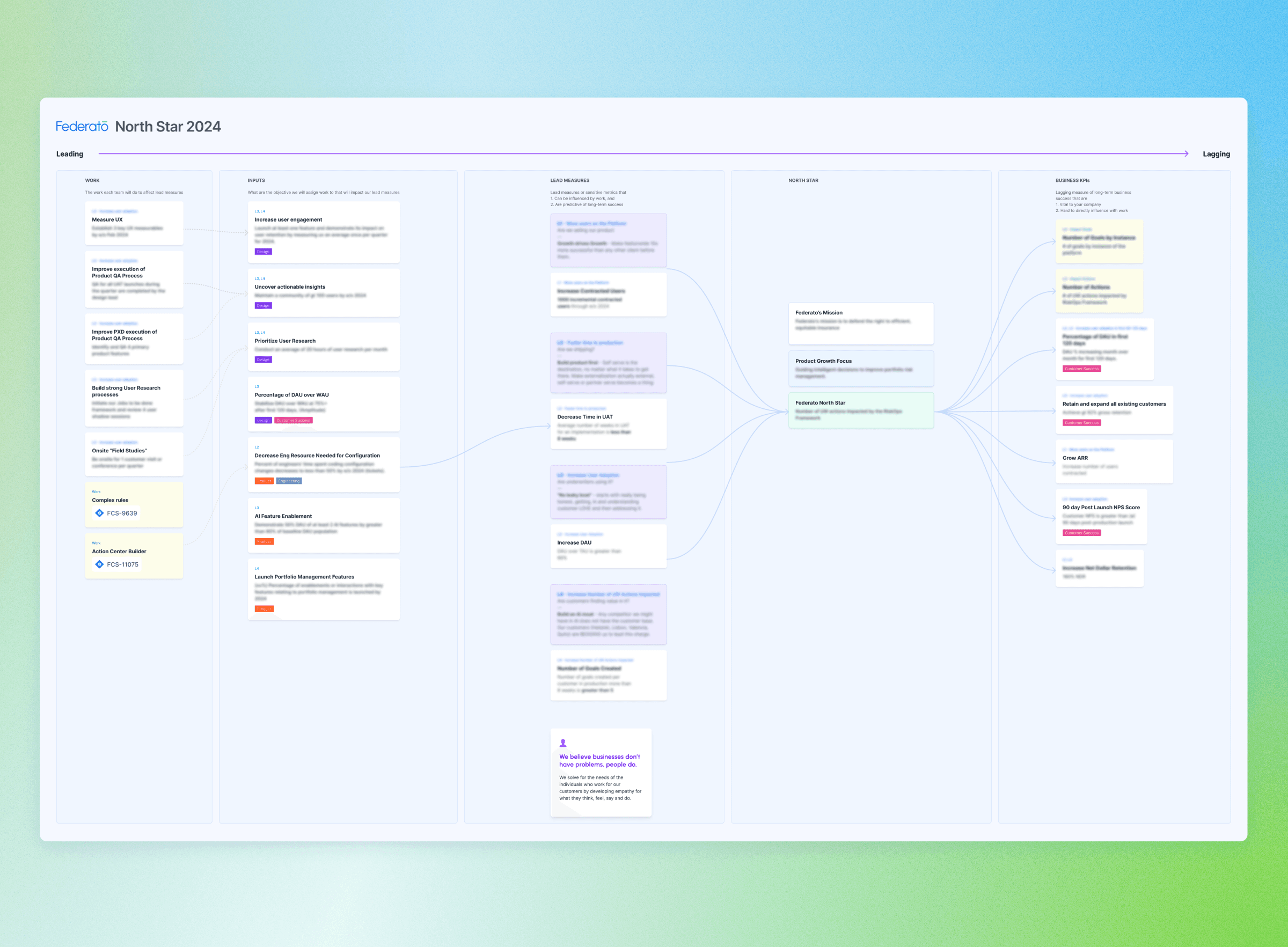
I created a comprehensive visual flowchart showing how inputs from six teams (Product, Engineering, Design, Sales, Customer Success, Marketing) flowed through four lead measures:
L1: Tied to sales
L2: Tied to efficient delivery
L3: Tied to customer value
L4: Tied to driving engagement
These lead measures connected directly to our mission, product focus, and North Star, which then mapped to our business KPIs on the lagging side.
Outcome
Resulting Change
Team confidence shifted noticeably. The North Star and lead measures became a reference point in weekly standups and quarterly offsites. Our teams could answer the question: "Why are we building this?"
Decision-making became faster because we had a shared framework for evaluating priorities. The CEO continued to evolve the lead measures over time, and while I was less involved in subsequent iterations, the foundation we built remained central to how Federato communicated strategy.
This project reinforced a core belief: design leadership isn't just about what we build, it's about why we build it and who we're building it for.
I looked beyond pixels and prototypes. I identified a systemic gap in organizational alignment, took the initiative to bring a strategic framework to the CEO, and then led the cross-functional effort to make it real.